Water Heater Leaking? Emergency Shutdown Steps
If you have a water heater leaking, every minute counts. First, shut off the water and the energy supply, but only if it is safe to do so. Then call a licensed plumber to inspect the leak.
Tankless Works Inc. | CSLB Lic. #1143155 | Serving San Diego County

A leaking water heater can quickly damage your home. Water may spread across floors, soak into drywall, or reach nearby electrical equipment. However, knowing what to do in the first few minutes can help limit the damage.
Whether you have a traditional tank or a tankless unit, acting fast matters. First, identify any immediate danger. Next, shut off the water and energy supply if you can do so safely. Finally, contact a licensed plumber.
This guide explains what to do when you find a water heater leaking, which warning signs to watch for, and when to call for help in San Diego County.
Water heater leaking? Start here.
If there is no gas smell, fire, or electrical danger, follow these three steps.
- Turn off the water supply to the water heater.
- Turn off the gas or electricity, but only if it is safe to do so.
- Call a licensed plumber to inspect the leak.
If you smell gas, leave immediately. Do not operate switches or try to shut down the water heater.
What to Do When You Have a Water Heater Leaking
A water heater leaking can mean anything from a small drip to a major release of water. Therefore, your first priority is to stop more damage without putting yourself at risk.
Step 1: Turn Off the Water Supply
First, find the cold-water pipe that leads into your water heater. Most systems have a shutoff valve on this line.
To close it:
- Ball valve: Turn the handle 90 degrees so it sits across the pipe.
- Wheel-style valve: Turn it clockwise until it stops gently.
Once closed, the valve should stop new water from entering the heater.
However, if the valve is missing, stuck, or leaking, do not force it. Instead, turn off the home’s main water supply if you can reach it safely.
Important: If water is near electrical outlets, wiring, or your electrical panel, stay clear of the area.

Step 2: Shut Off the Gas or Electricity
Next, the right move depends on whether your water heater runs on gas or electricity.
If You Have a Gas Unit

If there is no smell of gas and the valve is easy to reach, turn the manual gas shutoff valve to OFF. For a quarter-turn valve, the handle sits perpendicular to the gas pipe when it is closed.
Do not force a stuck valve, and do not try to disconnect the gas line.
If You Have an Electric Unit

Find the dedicated water heater breaker in your electrical panel and switch it off. However, if the panel or the floor around it is wet, do not approach or touch it.
Instead, keep clear and call an electrician or your utility for help.
Turning off the energy supply also keeps the heater from running after it loses water.
Step 3: Call a Licensed Plumber
Once you have safely isolated the water heater, arrange a professional inspection.
A licensed plumber can find the leak, check nearby connections, and decide whether repair or replacement makes sense.
Until then, do not restart the water heater. Wait until the problem is identified and the system is safe to run.
Why Is Your Water Heater Leaking? Common Causes
Finding the source helps you choose between a simple repair and a full replacement. However, not every leak comes from the heater itself. Nearby pipes and fittings can also be the cause.
Old or Corroded Tank
Tank water heaters corrode as they age. Eventually, corrosion can weaken the tank and let water escape.
If the inner tank is the source, replacement is usually necessary. Unlike a loose fitting, a damaged tank cannot be repaired safely.
Faulty Temperature and Pressure Relief Valve
The temperature and pressure (T&P) relief valve is an important safety device on a tank water heater. It releases excess pressure or heat from the tank.
If water drips from its discharge pipe, the valve may be opening because of unsafe conditions or a fault. Never cap or plug the discharge pipe. Instead, have a licensed plumber find the cause.
Loose Pipes or Plumbing Connections
Sometimes the water heater works fine, but a nearby fitting leaks.
Common trouble spots include cold-water inlets, hot-water outlets, unions, flexible connectors, and drain valves. Fortunately, a plumber can often fix these problems without replacing the whole water heater.
Sediment and San Diego Hard Water
San Diego’s hard water leaves mineral deposits inside water heaters. In tank models, sediment settles at the bottom. Meanwhile, tankless units can build up scale inside the heat exchanger.
Regular maintenance helps control buildup and reduces related problems. Our tankless water heater maintenance service is one way to stay ahead of it. For more detail, read our guide to San Diego hard water and our tankless water heater lifespan guide.
Tankless Units Can Leak Too
Tankless water heaters do not store a large tank of hot water. However, they can still leak.
Possible sources include the heat exchanger, plumbing connections, internal seals, service valves, and condensate drains on condensing models.
Some of these problems can be repaired. Others need a major component replaced, depending on the model and the extent of the damage. For help with either case, see our tankless troubleshooting and repair service.

Warning Signs of a Water Heater Leaking
A major leak is usually easy to spot. However, small leaks can continue for weeks before a homeowner notices them. Watch for these signs:
- Water collecting around the base of the heater
- Damp walls or flooring near the unit
- Rust or corrosion around plumbing connections
- Dripping or hissing sounds
- An unexpected loss of hot water
- Visible water coming from a tankless heater
- Repeated moisture around a drain pan
- A musty smell near the water heater closet
If you notice one or more of these signs, arrange an inspection. Acting early can prevent more property damage.
What to Do If You Smell Gas
Gas leak safety warning
If you smell gas, hear escaping gas, or suspect a gas leak, leave the area immediately.
Do not flip electrical switches, use a phone inside the affected area, light a flame, or try to repair or control the leak.
Once you are safely outside, call your gas utility. Call 911 if there is an immediate threat to people or property.
San Diego Gas Emergency Contacts
SDG&E: 1-800-411-7343
SoCalGas: 1-800-427-2200
Use the emergency number for your gas provider, and call from a safe location.
How to Limit Damage From a Water Heater Leaking
After you shut off the water heater, you can take a few more steps to protect your home.
First, keep people and pets away from the affected area, especially if electrical equipment is nearby.
Next, if the area is safe, move dry belongings away from the water. You can also photograph the damage for your records or an insurance claim.
For a major leak, contact a water-damage restoration company. A plumber can stop and repair the leak, while restoration professionals assess floors, walls, and other materials.
Finally, avoid restarting the water heater until a qualified professional has inspected it.
Repair or Replace When Your Water Heater Is Leaking?
The answer depends on where the water comes from, how old the equipment is, and what repairs cost.
| Leak source | Possible solution |
|---|---|
| Loose water connection | Repair or replace the fitting |
| Faulty drain valve | Inspect and replace if needed |
| T&P relief valve discharge | Diagnose pressure, temperature, and valve condition |
| Corroded tank | Usually requires replacement |
| Tankless heat exchanger | Evaluate repair cost and warranty coverage |
| Tankless condensate line | Inspect drainage and repair the cause |
For an older tank water heater, replacement often makes more sense than paying for major repairs. However, a newer tankless unit may have manufacturer warranty coverage on certain components. Therefore, a professional inspection is the best way to choose the right fix.
Should You Switch to Tankless After a Leak?
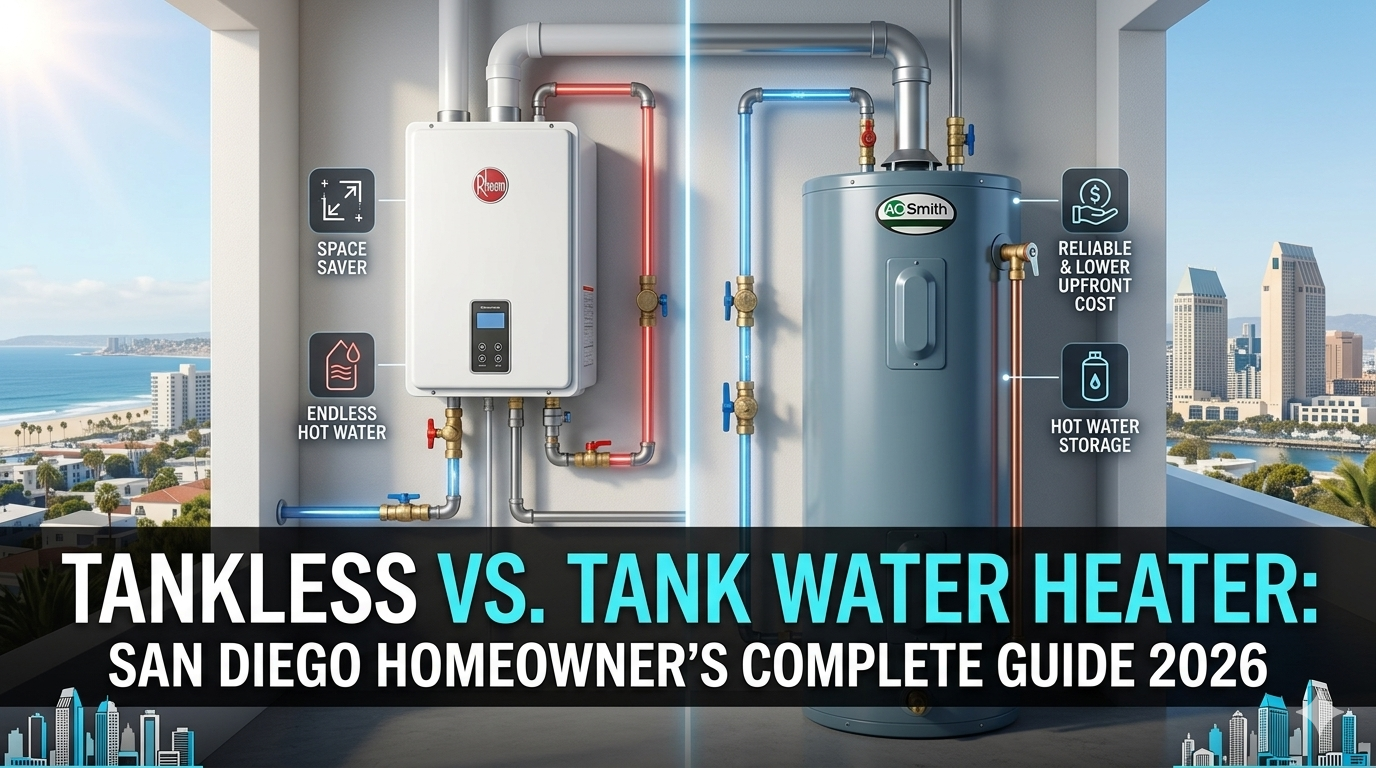
If your tank needs replacing, this can be a good time to consider a tankless water heater. Tankless systems offer a compact design, hot water on demand, and no large tank that can empty onto your floor.
However, installation may require changes to your gas supply, venting, or plumbing. Therefore, a site visit helps you decide which system fits your home.
For a closer comparison, read our tankless vs. tank water heater guide. You can also review our tankless installation cost guide for San Diego and our tankless savings analysis. When you are ready, see our tankless water heater installation service.
The U.S. Department of Energy also explains how to choose the right water heater.
Water Heater Leaking FAQs
Is a water heater leaking an emergency?
A major leak, a suspected gas leak, or water near electrical equipment needs immediate attention. Even a small leak should be inspected soon because it can get worse.
Can I take a shower if my water heater is leaking?
It is best to avoid hot water until the leak is found and the system is safe. Continued use can keep the leak active and, depending on the cause, may pose a safety risk with a gas unit.
How do I stop a water heater leaking?
If it is safe, turn off the cold-water supply valve. Next, shut off the gas or electricity. If you cannot reach the valves safely, keep clear and call a professional.
Can a leaking water heater be repaired?
It depends on the cause. A loose fitting, a faulty valve, or a tankless component issue can often be repaired. However, a leak from the tank itself usually means the tank has corroded inside, so the unit needs replacement. A licensed plumber can find the source and recommend the right option.
Can a tankless unit leak?
Yes. Tankless units can leak at pipe connections, service valves, internal seals, heat exchangers, or condensate lines. A professional inspection can find the source.
How much damage can a leak cause?
A standard 40 to 50 gallon tank can empty in a short time once it fails, and a supply line left open can add much more water. Therefore, shutting off both the water supply and the energy source right away is the best way to limit damage.
Does homeowners insurance cover a leaking water heater?
Coverage depends on your policy and the cause of the leak. Sudden water damage and damage from long-term leaks may be treated differently. Contact your insurer to confirm what your policy covers.
How can I prevent future leaks?
Regular maintenance can catch corrosion, worn valves, and loose connections before they become serious. Also, check your water pressure and manage hard water to protect your plumbing equipment.
Our Repair and Replacement Services in San Diego County
If your water heater is leaking, Tankless Works Inc. can inspect the system, find the problem, and explain your repair or replacement options.
Our services include:
- Traditional tank water heater replacement
- Tankless water heater installation
- Tankless troubleshooting and repair
- Plumbing connection and valve repairs
- Tankless water heater maintenance
- Whole-home water filtration and softener installation
We serve homeowners throughout San Diego County, including La Jolla, Mission Valley, Solana Beach, Del Mar, Carlsbad, and surrounding communities. Browse all of our service areas.
Water Heater Leaking? Contact Tankless Works.
Get professional help with water heater leaks, repairs, and replacement in San Diego County.
Tankless Works Inc. | CSLB Lic. #1143155 (verify the license) | Serving San Diego County
Tip: save or print this sticker for quick reference.